Slot makineleri ve rulet heyecanı yaşayan kullanıcılar bettilt sayfasına yöneliyor.
Kumarhane oyunlarını sevenler bettilt ile vakit geçiriyor.
Canlı bahis seçenekleriyle casinomhub heyecanı doruğa çıkarıyor.
Klasik masa oyunlarından slotlara kadar casinomnhub çeşitliliği sunuluyor.
Türk oyuncuların tercih ettiği oyunların çoğu, paribahis güncel tarafından Türkçe dil desteğiyle sunulur.
Mobil uyumluluk açısından bettilt sürümü öne çıkıyor.
Her oyuncuya özel fırsatlar sunan paribahis kullanıcılarını ödüllendiriyor.
Yapılan anketlerde kullanıcıların %77’si müşteri desteğine verilen yanıt hızını önemli buluyor; casinomhub giriş ortalama yanıt süresini 40 saniyeye kadar düşürmüştür.
Statista’ya göre 2024 yılı itibarıyla dünya genelinde 1.2 milyar kişi mobil üzerinden oyun oynamaktadır; bu da casinomhub giriş’in mobil stratejisini destekler.
Global oyun sektöründe e-cüzdan kullanımı 2024 itibarıyla %71’e yükselmiştir; paribahis güncel bu ödeme trendini desteklemektedir.
Kullanıcı yorumlarında övgüyle bahsedilen bettilt güvenilir bir seçenektir.
Gerçek zamanlı oran değişimleriyle bettilt bahis yapmayı heyecanlı hale getirir.
Kullanıcıların beklentilerini aşan hizmetleriyle bettilt fark yaratıyor.
Yeni özelliklerle donatılmış bettilt giriş sürümü sektörde heyecan yaratıyor.
Canlı rulet yayınlarında gecikme olmaması, bettilt giriş tarafından sağlanan güçlü altyapının bir göstergesidir.
İnternette eğlenceyi sevenler için paribahis güncel sistemleri cazip fırsatlar sunuyor.
Bahis güvenliğini artırmak için bahsegel sistemleri tercih ediliyor.
Promosyonlardan yararlanmak isteyenler bettilt sayfasını sık sık ziyaret ediyor.
Hızlı erişim isteyen oyuncular bahsegel uygulamasıyla tüm içeriklere anında ulaşabiliyor.
Kullanıcılarına güvenli ortam sağlayan altyapısıyla pinup sektörde ön plandadır.
Kullanıcıların sisteme anında erişebilmesi için casinomhub sayfası sürekli olarak optimize ediliyor.
Yeni üyelere verilen avantajlı kampanyalar arasında paribahis giriş fırsatları dikkat çekiyor.
Statista’nın 2026 tahminlerine göre global online bahis kullanıcı sayısı 2,2 milyarı aşacak ve bu kullanıcıların %80’i mobil cihazlardan işlem yapacak; bu oran bettilt giriş’te zaten gerçekleşmiş durumda.
PwC raporuna göre, 2024 yılı itibarıyla ortalama online bahis kullanıcısı haftada 4.2 saatini oyunlara ayırmaktadır; bu oran Bettilt giriş kullanıcılarında daha yüksektir.
Klasik kumarhane atmosferini evlere taşıyan bettilt bölümünde çeşitlilik oldukça geniş.
Online eğlencenin artmasıyla birlikte bettilt kategorileri daha popüler oluyor.
Oyuncular hızlı işlem yapmak için bettilt giriş bağlantısını takip ediyor.
İnternet üzerinden daha kolay erişim için paribahis giriş sayfası kullanılıyor.
Bahis severlerin en çok tercih ettiği güvenilir sitelerden biri paribahis olmaya devam ediyor.
Türkiye’de rulet, hem eğlence hem strateji arayan oyuncular için popüler bir seçenektir ve paribahis güncel giriş bunu profesyonel şekilde sağlar.
Evolution, Pragmatic Play ve Ezugi gibi sağlayıcıların toplam canlı oyun cirosu 2024 yılında 5,3 milyar doları geçmiştir; bu büyüme paribahis giriş gibi operatörleri güçlendirmektedir.
Slot oyunlarında bahis miktarı, kazanç potansiyelini doğrudan etkiler; bahsegel giriş oyunculara bu konuda rehberlik eder.
Her cihazla uyumlu çalışan paribahis sürümü pratik bir deneyim sunuyor.
Kumarhane heyecanını seven kullanıcılar paribahis ile keyif buluyor.
Promosyonlardan yararlanmak isteyen oyuncular casinomhub giriş fırsatlarını inceliyor.
Canlı destek hizmetiyle 7/24 aktif olan bettilt her an yanınızda.
Curacao lisansı, bağımsız test laboratuvarları tarafından doğrulanan %100 adil oyun garantisini sağlar ve rokubet giriş bu garantiyi sunar.
Kumarhane atmosferini evlere taşıyan paribahis kullanıcıların ilgisini çekiyor.
Türkiye’de çevrim içi kumar yasal değildir, ancak casinomhub güncel giriş gibi yurtdışı lisanslı siteler Türk oyunculara hizmet verir.
Rulet ve poker gibi seçeneklerle dolu bettilt büyük beğeni topluyor.
Kumarhane heyecanını arayanlar için bahsegel kategorisi vazgeçilmezdir.
Bahis deneyiminizi kolaylaştırmak için geliştirilen bettilt kullanıcı arayüzü çok sezgiseldir.
Online oyunlarda RTP oranı ortalama %95.8 olarak ölçülürken, paribahis giriş bu oranı %97.4 seviyesine taşımaktadır.
Kazancını artırmak isteyenler için casinomhub promosyonları cazip hale geliyor.
2026’te yenilikçi kampanyalarla gelecek olan bahsegel heyecan yaratıyor.
Türkiye’de bahis dünyasında fark yaratan pinup giriş kullanıcılarına güvenli hizmet sunuyor.
2026’te yenilikçi kampanyalarla gelecek olan paribahis heyecan yaratıyor.
Güvenilir ödeme sistemleriyle ön plana çıkan casinomhub işlemlerinizi kolaylaştırır.
Slotlarda kazanç oranları genellikle volatiliteye bağlıdır; bu veriler bahsegel giriş tarafından paylaşılır.
Türk oyuncular arasında kripto para ile yatırım popüler hale gelmiş, Bettilt bu yöntemi destekler.
Türkiye’de bahis severler, uzun yıllardır güvenilir hizmet sunan bettilt giriş sayesinde farklı kategorilerde kuponlar hazırlayabiliyor.
Finansal güvenliğin anahtarı olan bahsegel sistemi memnuniyet sağlıyor.
Bahis tutkunlarının güvenli bir ortamda keyifle oyun oynayabilmesi için özel olarak tasarlanan casinomhub giriş, modern güvenlik protokolleriyle tüm işlemleri koruma altına alıyor.
Bahis tutkunlarının güvenli bir ortamda keyifle oyun oynayabilmesi için özel olarak tasarlanan bettilt giriş, modern güvenlik protokolleriyle tüm işlemleri koruma altına alıyor.
2026 sürümüyle piyasaya çıkacak olan bettilt büyük ses getirecek.
Cep telefonları üzerinden kesintisiz erişim için bettilt sürümü tercih ediliyor.
Bahis dünyasında şeffaf yönetim politikasıyla güven kazanan bettilt sadık bir topluluğa sahiptir.
Yüksek RTP oranlarına sahip slot oyunlarıyla bettilt giriş kazanç fırsatlarını artırır.
Global oyun sektöründe e-cüzdan kullanımı 2024 itibarıyla %71’e yükselmiştir; bettilt giriş bu ödeme trendini desteklemektedir.
Mobil kullanıcı deneyimini geliştiren bettilt sistemi oldukça popüler.
President Gary Spaid’s favorite map Many of you have never met all of our board members, which sometimes makes it hard to make an educated decision, come election time. Here is your chance to get to know those who effect our organization’s business.
Name: Tom Sveum City & State: Oakdale, MN Position(s): Board Member
I started collecting oil maps on family vacations to Glacier, the Seattle World’s Fair, and California in the late 50’s and 60’s. I continued making road trips with friends in college. For about 10 years I also mailed away for officials from the US and Canada. I was happy to learn that others also collected road maps when I found out about the RMCA and joined in the late 90’s. At first when friends in the RMCA asked me what I collected I said–all road maps. It took me several years and annual map shows to realize that the maps that meant the most to me were oils from the “golden age of maps” (1955-1973) that showed the locations of gas stations listed or with symbols on the map. I also now collect more recent location maps given out by Sheetz, Love’s, and even fast food and motel chains. I have put together a list of maps with locations that now is in the Member’s section of our website.
Name: Mark Greaves City & State: Wheat Ridge, CO Position(s): Board Member; Newsletter (Legend) Editor
I became interested in collecting old road maps while working at Rand McNally in the early 1990s, and joined the RMCA shortly after it was formed. I have attended many of the Map Expos, served as Secretary for several years and have been editor of the RMCA newsletter “The Legend” since 2008. In addition I have done extensive work on the Official Maps Master List, and the Petroleum Map Catalog. As director, I hope to help the RMCA to expand and continue to provide valuable information to the road map collecting community.
Name: Dave Leach City & State: Lemoyne, PA Position(s): Board Member
OK, first, I’m as old as Rand McNally’s accordion fold… That out of the way I began collecting when visiting a cousin in Florida who had a box of maps he had been collecting. his dad made him give one of them to me, so of course I chose the Sinclair Tour Kit, the one with the cartoon style US map and characters. I think I was 11. I have a wide range of collecting interests including foreign and special issue/event type maps. I’ve been on the RMCA Board before, did the Legend for almost many of our early years, and am now coordinating our exhibit at the AACA Museum in Hershey, PA. I anticipate that my board presence will mostly be involving that exhibit, and the special exhibit we will have there in 2020. I strongly believe that we need to attract members and collectors who arrived on the scene after the gas station maps had vanished. I believe that the AACA involvement will help to a large extent, but there may be other ways we can work toward that end with local museums, libraries or schools as individual collectors. I also believe that we can, and should, hold small regional collectors meets in various places. I WILL BE ASKING THAT MEMBERS FIND WAYS TO CONTRIBUTE – THAT RMCA NOT BE THE SAME GROUP OF ACTIVE MEMBERS!
Name: Jim Wakefield State: California Position(s): Director
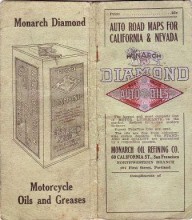
Monarch Diamond 1911 road map
When did you start collecting maps and why?
I started collecting maps when I was a teen in the early 1970s. Before that, my main interest was building model buildings from scratch. Many of my favorite buildings were gas stations (I still have a few of the best). In the process of honing my model building technique, I discovered that if went to gas stations and picked up free road maps , I could I cut them up and use their logos as signage on the models that I built. One day in 1973, everything changed. On that day, my grandmother gave me a large pile of what I thought were really old gas station maps with old fashioned logos on them. I found these maps to be far too old and interesting for me to cut them up for model signage. That was the day I started my road map collection.
What is your current focus of types of maps (oil, officials, AAA, foreign, etc) you want to continue to collect?The focus of my collection is North American oil company maps. Many people think I’m crazy for trying, but my goal has always been, and still is, to collect one of every single North American oil company map that was ever issued.
How many maps do you have in your collection?
Over 30,000 oil company maps, and still growing.
What method or type of file do you have, and how do you store/file them in order to know what you have in your inventory of maps?
I have far too many maps for me to attempt to remember them without assistance. Therefore, I created a detailed system to keep track of them. I have entered all of my maps in a computerized database program, in which they are indexed by company, date, geographic location, and map code, and stored accordingly. When I get a new map, I first enter it into the computer database, then I place it in an individual poly sleeve for protection, and I finally store it with other maps in my collection, which are kept in rows in banker’s boxes, all filed according to the index in the database. I also keep a printed list of all my maps in the database, which I take with me whenever I go hunting for maps. It is currently almost 500 pages long. In addition to these, I also created a gallery of map images to help me keep track of what I have. It contains all unique cover and rear designs of maps in my collection. These are organized by company and date.
In regards to our website what would you like to see in the future?
When I am out looking for road maps, I am often asked if there are any books on how to collect road maps. Unfortunately, I have to tell them that there are no books on how to collect road maps currently in print. I think that is the number one item needed to help build this hobby. In the absence of a guide book, I would like us to add material to the website to help fill that need, so that the website will eventually contain sufficient information to guide a person who is interested in collecting maps on how to do that.
What suggestions do you have for someone to consider stepping up into a leadership role within RMCA?
Make yourself and your interests known to the club. Map collecting is by nature a solitary pursuit. You can’t expect the Board to know about you and your desire to take on a leadership role if they don’t know anything about you or your collecting interests. Start out by asking questions and sharing your knowledge with other members on the RMCA email list. Next, do something for the club–an easy way to do this is write a short article on your favorite map for the Legend. If you are serious about wanting to take on a leadership role in the RMCA, a particularly important step is to attend the annual RMCA Map Expo, where you will not only meet map collectors from all over the world, but you will get to know most of the members who are currently running the club. If the Map Expo is too far away for you to travel to, you can also organize and/or attend a regional map swap meet, such as the fall 2012 West Coast Map Swap Meet. Finally, and most importantly, volunteer to help on one or more RMCA major projects, such as the one of the master map lists, and/or the website.
Now is your opportunity to show off your favorite/favourite, why it is, and how you obtained it.
What excites me most about map collecting is finding a map that nobody knew ever existed. In map collecting, this happens more often than one would expect. For me, it is the ever present possibility of making such a “find” that really sets road map collecting apart from other collecting hobbies. One of my favorite maps, as well as my best find, is a booklet of strip maps of California and Nevada issued by Monarch Oil Refining Co. in 1911. This map is very special because, prior to my acquisition of it, the oldest North American oil company issued map known to exist dated to 1912. My map is the oldest dated North American oil company road map that I know of, as well as the only known copy of it still in existence.